
Braces Aren’t Just for Kids: What Adult Treatment Really Looks Like
One of our favorite moments in the practice goes like this: an adult brings their teenager in for a consultation, hovers by the chair, and finally asks, half-joking — “Is it too late for me?”
It never is. Orthodontists move teeth by applying gentle, sustained pressure that remodels the bone around them, and that biology works at 45 and 65 the same way it works at 15. Adults now make up a substantial share of orthodontic patients nationwide, and in our Boca Raton practice, we treat parents and grandparents of our teen patients all the time.
Still, most adults who want straighter teeth hesitate for years — usually because their mental picture of “braces” was formed in a middle-school hallway decades ago. So let’s replace that picture with what adult treatment actually looks like today.
First, Why Adults Do This (It’s Not Just Looks)
Yes, plenty of adults come in wanting a straighter smile for a wedding, a career move, or simply themselves after years of putting everyone else first. That’s reason enough. But crooked teeth aren’t only a cosmetic issue:
- Crowded, overlapping teeth are harder to clean, which raises the risk of decay and gum disease in exactly the spots you can’t reach.
- Misaligned bites wear teeth unevenly, chipping edges and flattening enamel years ahead of schedule.
- Bite problems can strain the jaw, contributing to clenching, discomfort, and cracked dental work.
- Teeth drift with age. Even people who had braces as teens often see crowding creep back over the decades, especially in the lower front teeth.
Many of our adult patients also start orthodontics as step one of a bigger plan — their dentist needs teeth in better positions before placing a crown, bridge, or implant properly.
Your Options Look Nothing Like 1995
Here’s where adult treatment has changed most. You have real choices now:
Clear aligners. Removable, nearly invisible trays you switch out on a schedule, custom-made from a digital scan of your teeth. You take them out to eat, brush, and floss — which means no food restrictions and no new cleaning gymnastics. They demand discipline (they only work while you wear them, about 22 hours a day), but for many adult cases they’re a superb fit.
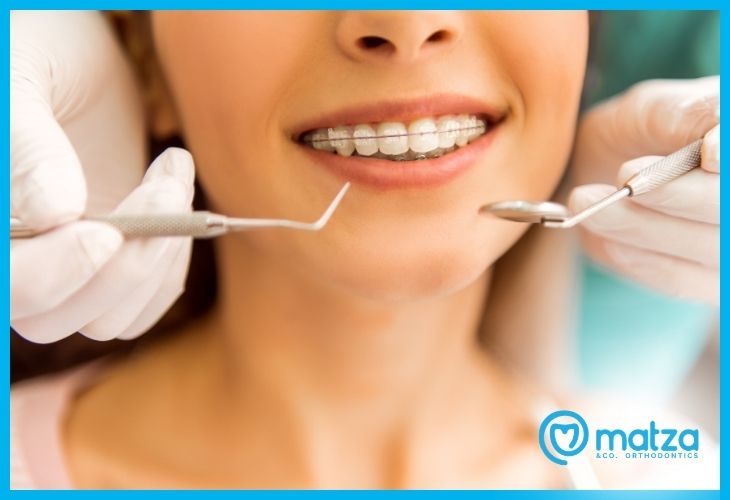
Ceramic braces. All the precision of traditional braces, with tooth-colored brackets that blend in dramatically. From conversation distance, most people simply don’t notice them.
Modern metal braces. Today’s brackets are smaller and more comfortable than what you remember, and they remain the workhorse for complex movements. Some adults choose them deliberately because they never have to think about compliance — the braces work full-time whether you remember them or not.
Which option fits you depends on your bite, the complexity of the movements needed, and your lifestyle. That’s a conversation, not a formula — and it’s exactly what a consultation is for.
“Adults are some of our most rewarding patients. They’ve thought about this for years, they follow instructions beautifully, and when we take the appliances off, the reactions are unforgettable. Age has never been the obstacle people think it is — healthy teeth and gums can be moved at any stage of life.” — Dr. Barry Matza, Matza Orthodontics

The Honest Timeline, Start to Finish
Here’s how adult treatment typically unfolds:
The consultation. We examine your teeth, gums, and bite, take digital records, and talk about what’s bothering you and what’s possible. You leave knowing your options, the expected timeline, and the cost — no mystery.
The gum-health check. This step matters more for adults than teens. Moving teeth through unhealthy gums is asking for trouble, so if there’s any gum disease, we coordinate with your dentist to get it stable first. It’s a detour, not a dead end.
Active treatment. Most adult cases run somewhere between 12 and 24 months, though minor corrections can finish faster. Adult bone remodels a bit more slowly than teenage bone, so timelines can run modestly longer — but the destination is the same. Expect a few days of pressure and tenderness after each adjustment or new aligner set; over-the-counter pain relievers and soft foods handle it.
Living your life meanwhile. This is the part adults overestimate. Within a couple of weeks, appliances become background noise. You’ll present at meetings, eat at restaurants, and take photos — our patients routinely tell us colleagues never noticed their aligners at all. Checkups are typically every 6 to 10 weeks and fit around work schedules.
Retention. Once treatment ends, retainers keep your investment where it belongs. Teeth have long memories at every age, so plan on wearing retainers nightly for the long haul. It’s a small habit protecting a big result.
Experience Matters More for Adult Cases
Adult orthodontics involves realities teen treatment often doesn’t: existing crowns and dental work, past gum issues, worn teeth, and coordination with your general dentist. This is where experience shows. Dr. Barry Matza and Dr. Heather Ercolano bring board-certified expertise and more than 30 years of practice history to every case — and our before-and-after results speak for themselves.

Teen or adult, braces straighten crooked teeth, align upper and lower jaws, improve the aesthetics of smiles and faces, and relieve pressure on temporomandibular joints. Ultimately, braces will give you that camera-ready smile! Come and meet with us!
Frequently Asked Questions
Am I too old to get braces?
No. As long as your teeth and gums are healthy, orthodontic treatment works at any age — the biology of tooth movement doesn’t retire. We regularly treat patients in their 40s, 50s, 60s, and beyond.
How long do braces take for adults?
Most adult cases finish in 12 to 24 months, with minor corrections sometimes done in under a year. Adult treatment can run slightly longer than teen treatment because mature bone remodels more slowly, but your orthodontist will give you a realistic estimate upfront.
Are clear aligners as good as braces?
For many adult cases, yes — clear aligners deliver excellent results when worn consistently, about 22 hours a day. Complex bite corrections sometimes still call for braces. The right answer depends on your specific case, which is exactly what a consultation determines.
Do adult braces hurt?
Expect pressure and tenderness for a few days after adjustments or new aligners — manageable with over-the-counter pain relief and softer foods. Day to day, most adults describe treatment as an occasional awareness, not pain.
The Consultation Costs You Nothing but the Question
If you’ve been quietly wondering “is it too late for me?” — come find out how possible this actually is. Bring your questions; we’ll bring straight answers and a plan. We can’t wait to meet you!
Schedule your consultation: Contact Matza Orthodontics
Call us at 561.368.3480. Follow Matza Orthodontics on Instagram @matzaorthodontics